Water damage guide
How Structural Drying Works: The Equipment Explained
Air movers, LGR dehumidifiers, HEPA scrubbers, and moisture meters — a plain-language guide to the equipment professionals use to dry water-damaged structures.
Washington, DC·Water Damage DC
Drying a Building Is Not the Same as Drying a Room
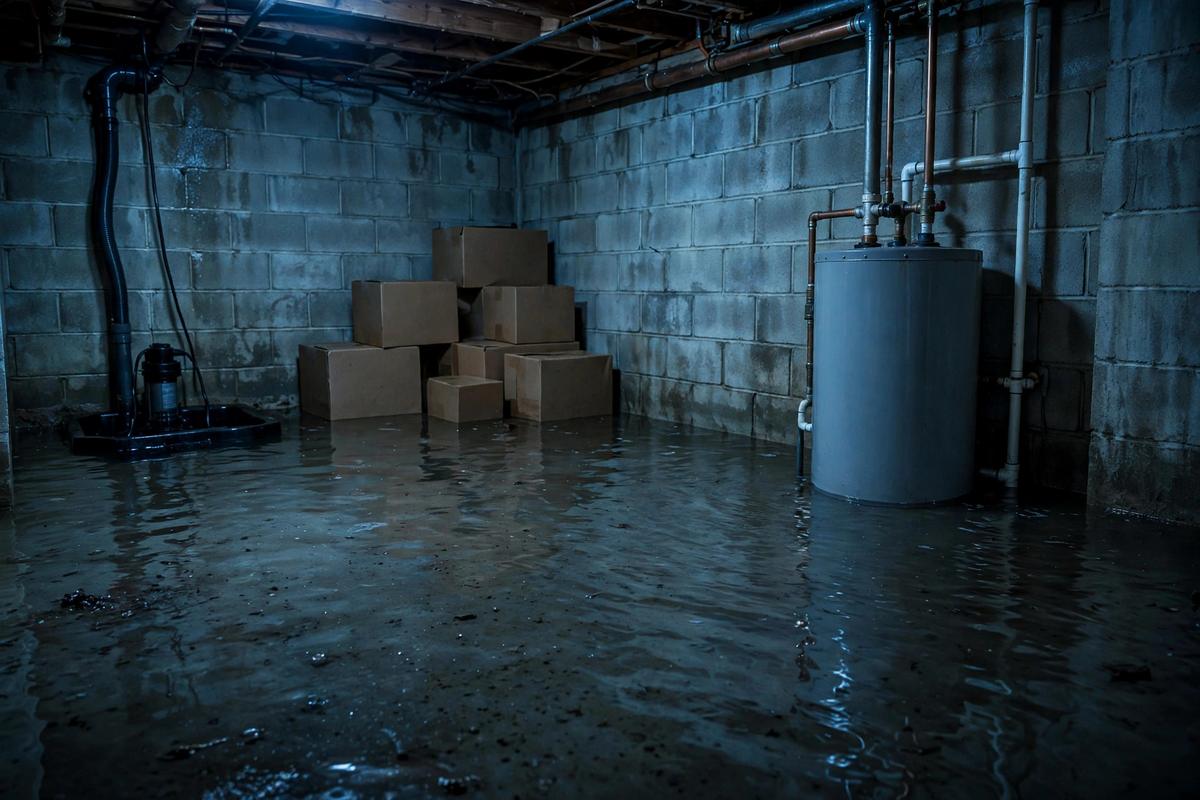
After water damage, the surfaces you can see may feel dry while water remains trapped inside walls, under flooring, and within framing. Structural drying is the process of removing that hidden moisture from building materials — not just from the air — using purpose-built equipment and moisture measurements. Understanding the equipment helps you understand why professionals insist on acting quickly and why household fans are rarely enough.
The Science in Plain Language
Drying comes down to three things: airflow, humidity, and temperature. Air movers create fast airflow across wet surfaces, which speeds evaporation. Dehumidifiers pull that evaporated moisture out of the air so it does not resettle on surfaces. Warmer air holds more moisture, so controlled heat helps the cycle. A professional balances all three and measures progress daily — because drying that stalls or goes too fast can warp wood and crack finishes.
Air Movers: Engineered Fans
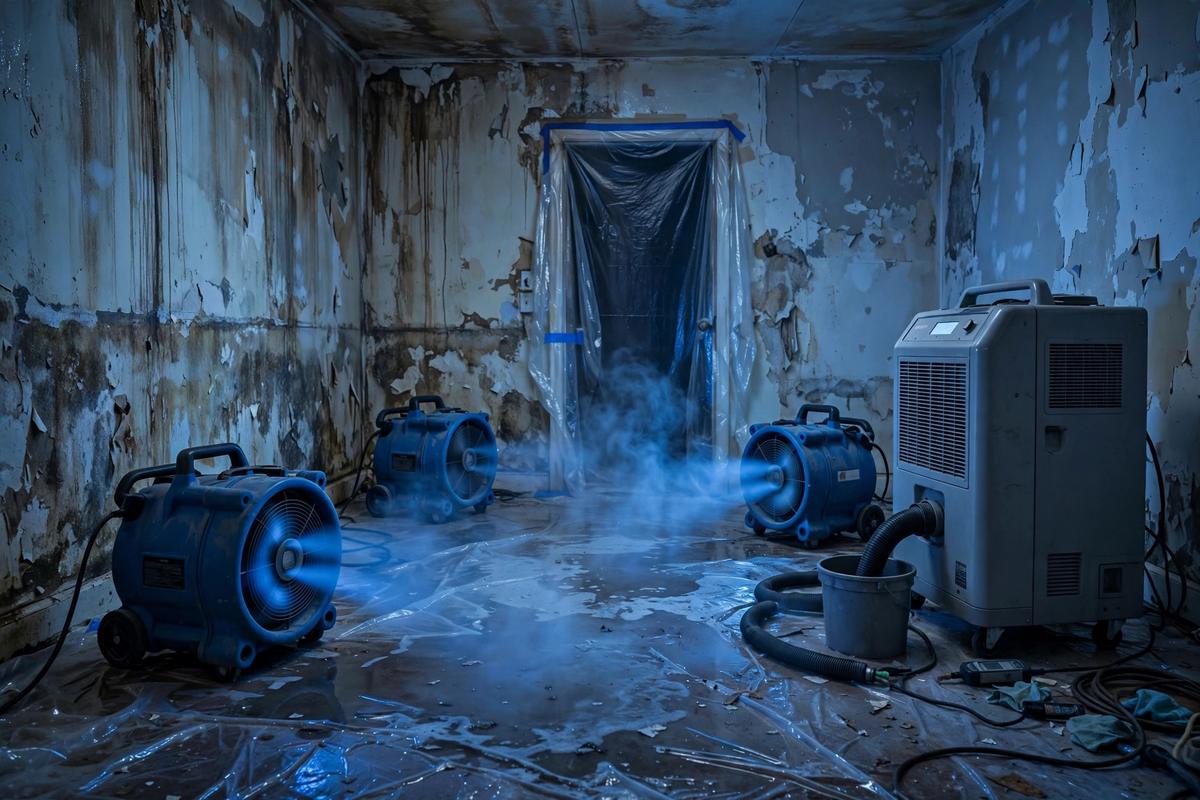
Air movers are not ordinary fans. They produce high-velocity, focused airflow directed at walls, floors, and cavities to accelerate evaporation from surfaces. Professionals position them at precise angles — for example, aimed along a wall at a low angle to push air across the surface and into wall cavities via drilled access points or removed baseboards. Placement matters more than quantity: a few correctly aimed air movers outperform a room full of household fans pointed randomly.
LGR Dehumidifiers: The Workhorses
LGR (low-grain refrigerant) dehumidifiers are the standard in professional drying. They chill air to condense moisture out of it, then reheat the air before returning it to the room. The "low-grain" part matters: they continue pulling moisture even when the air is already relatively dry, which is exactly what is needed in the final stages of drying dense materials like hardwood and framing. Standard residential dehumidifiers stall out at higher humidity levels and cannot finish the job on saturated structures.
HEPA Air Scrubbers: Cleaning the Air During Drying
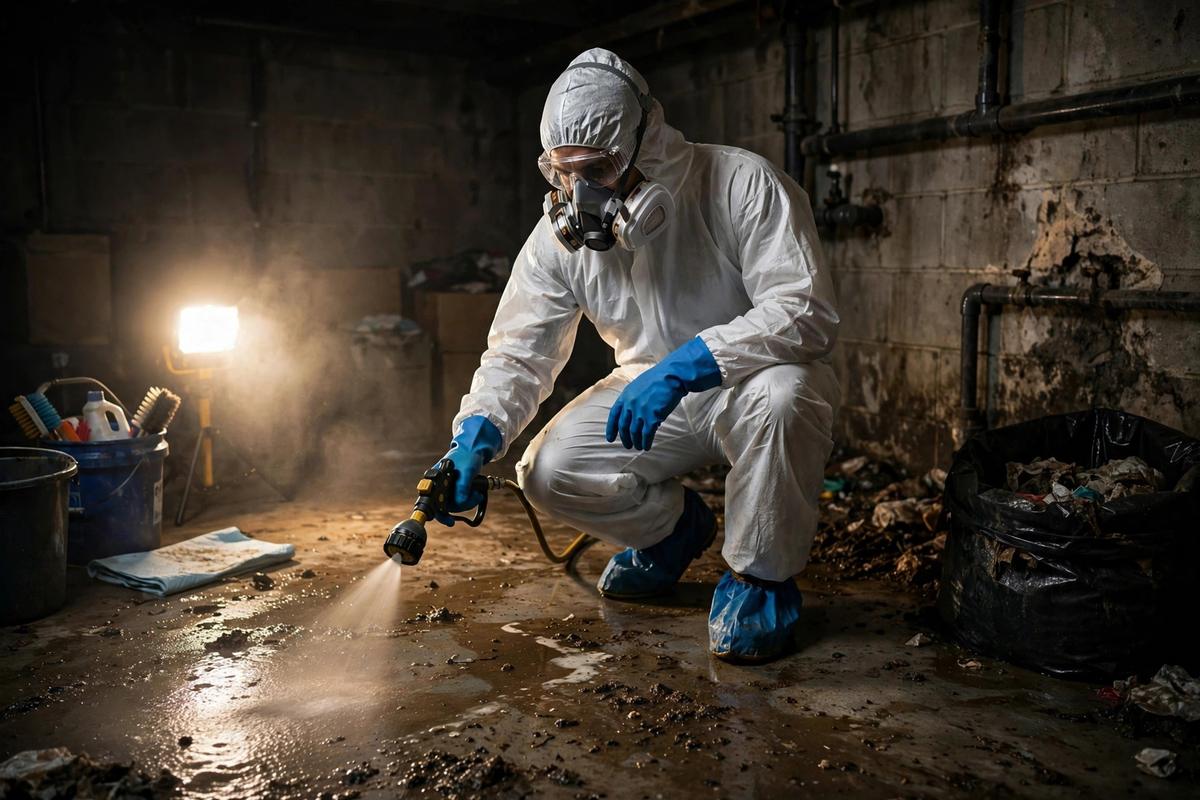
Drying disturbs dust, and after events involving contamination — or where mold is a concern — the air needs filtering. HEPA air scrubbers pull room air through high-efficiency filters that capture fine particles, including mold spores and other contaminants. They are often used to create negative air pressure in a contained drying area, so air flows inward toward the filter rather than carrying particles out into the rest of the home.
Moisture Meters: Proof the Job Is Done
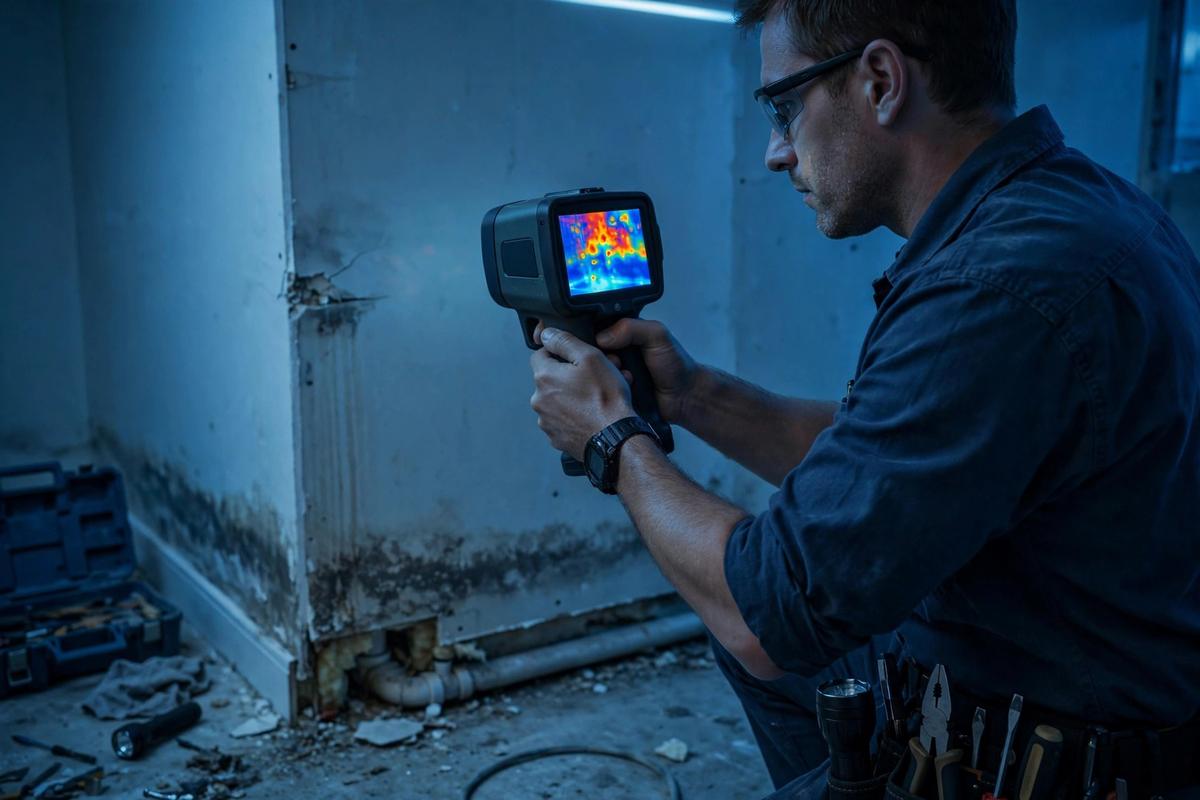
The most important tool is the one that measures rather than dries. Professionals use moisture meters — pin-type meters that read moisture inside wood and drywall, and non-invasive meters that scan surfaces — to establish a baseline on day one and track readings until materials return to their dry standard. They also compare against unaffected areas of the home to know what "dry" actually means for that building. Without meter readings, drying is guesswork; with them, it is verifiable.
Why Speed Matters: The 24–48 Hour Window
Structural drying should begin as quickly as possible because mold can begin growing on damp materials within 24 to 48 hours, and prolonged saturation causes secondary damage: swelling wood, delaminating finishes, and wicking moisture into previously dry areas. A professional drying setup running within hours of a water event dramatically reduces both the damage and the time materials spend in the danger zone.
How Moisture Moves: Wicking and Secondary Damage
One reason professionals measure moisture rather than eyeballing it is wicking: water climbs upward through drywall and wood fibers, sometimes a foot or more above the visible water line. Meanwhile, secondary damage spreads outward — humidity from the wet area migrates into adjacent rooms, swelling doors, warping trim, and feeding mold in places the water never directly touched. This is why drying equipment is often placed beyond the obvious damage zone, and why a thorough moisture survey with meters on day one catches problems that a visual inspection misses.
What to Expect When Professionals Set Up
A typical structural drying job involves: an initial inspection with moisture readings and photos, removal of unsalvageable materials (like saturated carpet pad), placement of air movers and dehumidifiers sized to the space, containment of the drying area where needed, and daily monitoring visits to check readings and reposition equipment. The equipment runs continuously — often for several days — and turning it off early is the most common reason drying fails. Trust the meter readings, not the calendar.
Need help now? Call (202) 449-5074 to be connected with a local water damage provider in the Washington DC area. The call is free, and providers are ready to discuss your situation and dispatch a team when you need one.