Water damage guide
How Moisture Meters and Thermal Imaging Find Hidden Leaks in Washington DC Homes
Water hides behind walls and under floors long before you see it. Learn how pin and pinless moisture meters plus thermal imaging cameras help professionals find hidden leaks early.
Washington, DC·Water Damage DC
The most damaging leaks are the ones you cannot see. A slow pipe leak inside a wall or a roof leak soaking insulation can go unnoticed for weeks while quietly feeding mold and rotting framing. Professionals do not rely on guesswork to find this hidden moisture — they use moisture meters and thermal imaging cameras that reveal what eyes cannot. Here is how each tool works and how experienced technicians interpret what they find in Washington DC homes.
Why hidden leaks are so hard to find
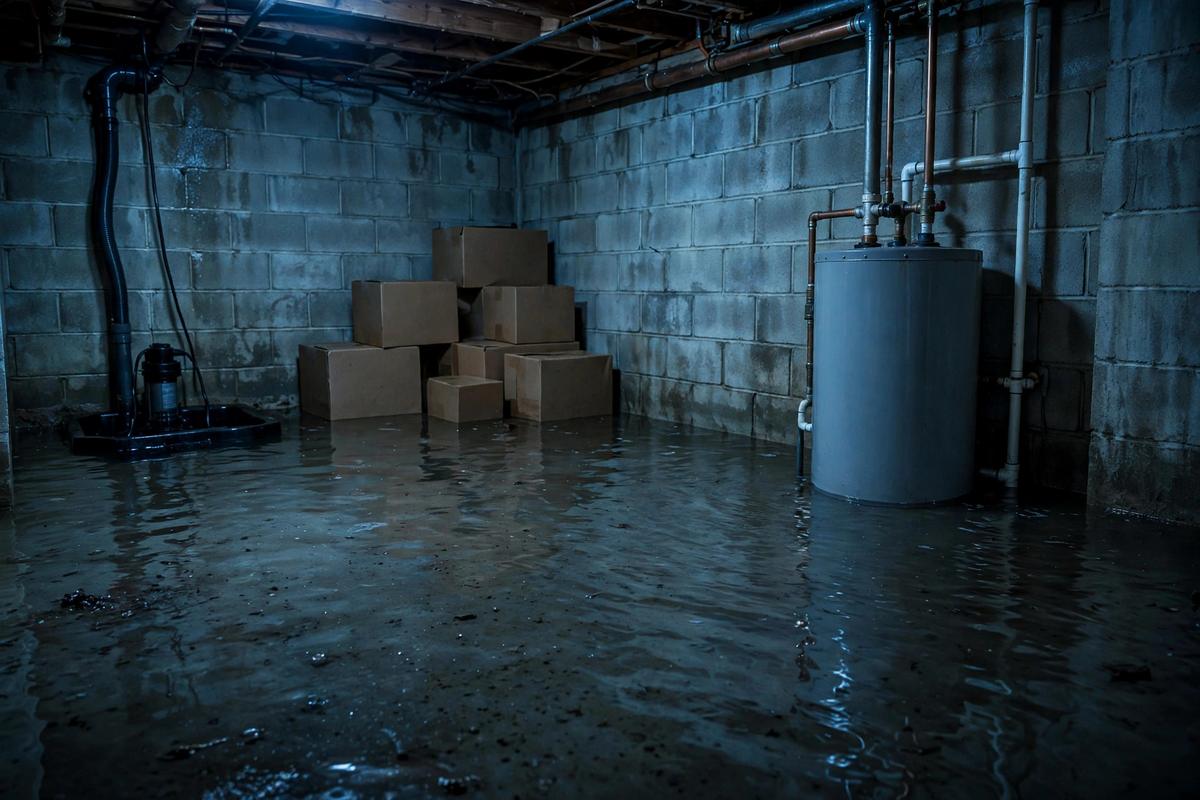
Water rarely stays where it starts. It travels along pipes, wicks through drywall, runs down framing, and pools far from the original leak — which means the stain on your ceiling may sit several feet from the actual problem. Surfaces can also look and feel dry while the material behind them is saturated. By the time paint bubbles or a musty smell appears, the damage is often extensive. That is why professionals measure moisture directly instead of trusting appearances: finding the full extent of wet material early means smaller repairs and far less demolition.
Pin moisture meters: the direct-contact test
A pin meter uses two small probes pressed into or against a material. It works by measuring electrical resistance: dry wood and drywall resist electrical current, while water conducts it, so wetter material gives a lower-resistance reading that the meter converts to a moisture percentage. Technicians use pin meters to get precise readings at specific points — for example, comparing the moisture level of a suspect section of drywall against a known-dry section of the same wall. The probes leave tiny holes, so they are best used for confirmation testing rather than scanning large areas. For wood framing and subfloors, pin readings are among the most trusted measurements in the industry.
Pinless moisture meters: scanning without the holes
Pinless meters work differently: they emit low-frequency electromagnetic waves into the material and measure how the signal is affected, which changes with moisture content. The big advantage is speed and non-invasiveness — a technician can glide the meter across walls, ceilings, and floors to map out damp areas without poking holes everywhere. Pinless meters read to a certain depth and average moisture over a small area, which makes them excellent for initial surveys: finding the boundaries of a wet zone quickly, then following up with pin readings for precision. Many professionals carry both types and use them together.
Thermal imaging: seeing temperature, inferring moisture
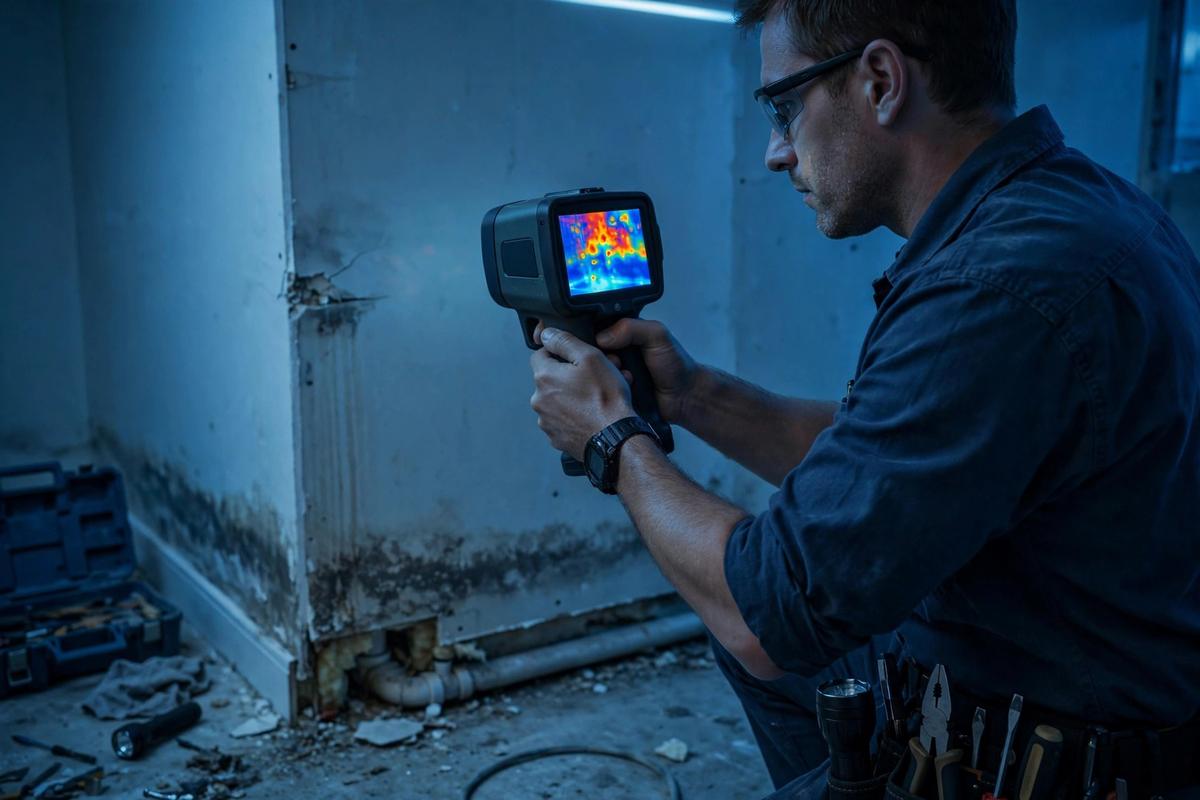
A thermal imaging camera does not see water — it sees surface temperature, rendered as a color map. Wet building materials are usually cooler than dry ones because evaporating moisture draws heat away, and water changes how a material holds and releases heat. That temperature difference shows up on the camera as a distinct pattern, often revealing a leak's path behind a wall or a cold, damp patch in a ceiling that looks perfectly normal to the eye. Thermal cameras can scan entire rooms in minutes, making them ideal for the first sweep of a suspected problem area. But temperature differences can have innocent causes too — missing insulation, air leaks, or cold water lines — so a thermal image is a clue, not a verdict.
How professionals put it all together
The real skill is interpretation, not just owning the tools. An experienced technician starts with the thermal camera to spot anomalies, then verifies each one with a moisture meter, and compares readings against dry reference points in the same building. They look for patterns: a plume spreading downward from a supply line, a horizontal band suggesting a window leak, or a cold corner that turns out to be an insulation gap rather than moisture. They also factor in the building itself — DC's older plaster walls, for instance, read differently than modern drywall. This layered approach maps the true extent of wet material, so drying equipment goes exactly where it is needed and repairs open up only what must be opened.
What this means for your home
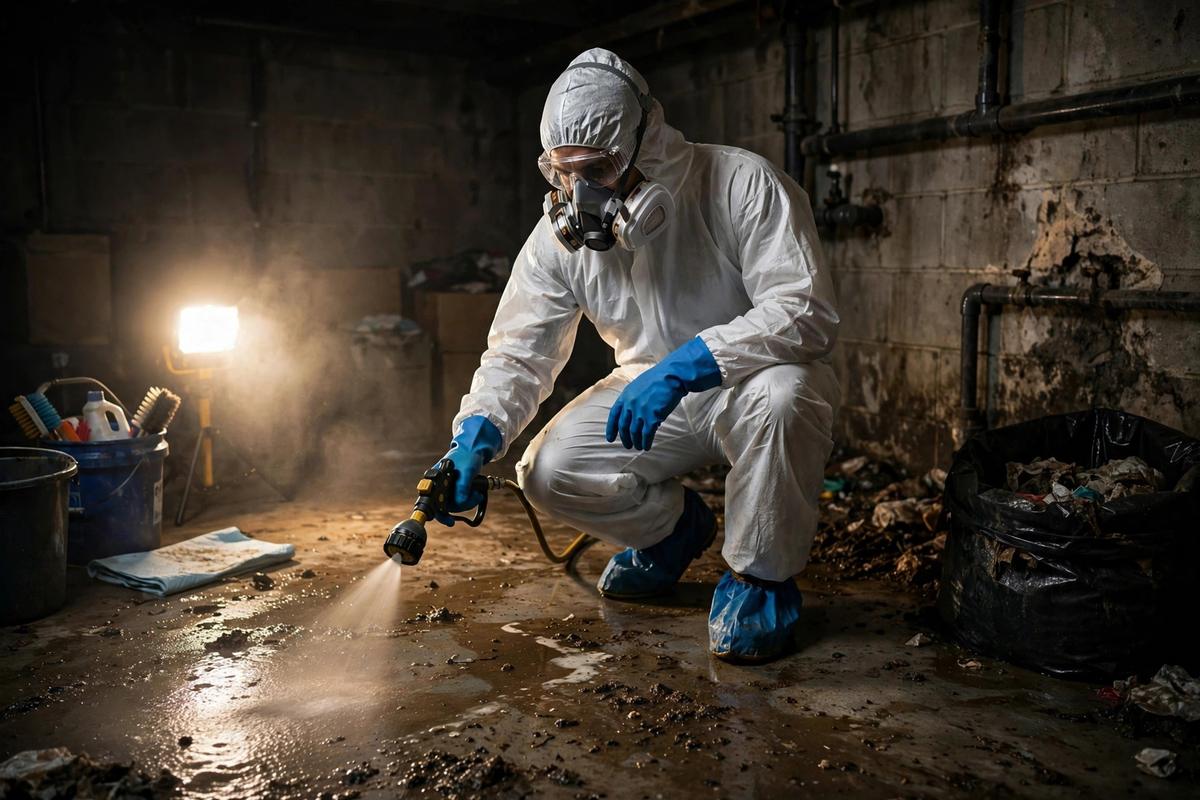
For homeowners, the takeaway is simple: if you suspect a hidden leak — a musty smell, a rising water bill, a faint stain, or warping flooring — professional detection finds the problem faster and with less damage than exploratory demolition. Accurate moisture mapping also matters after any water event, because drying is only complete when meter readings confirm materials are truly dry, not just dry to the touch. Skipping that verification is one of the most common reasons mold appears weeks after a supposed cleanup.
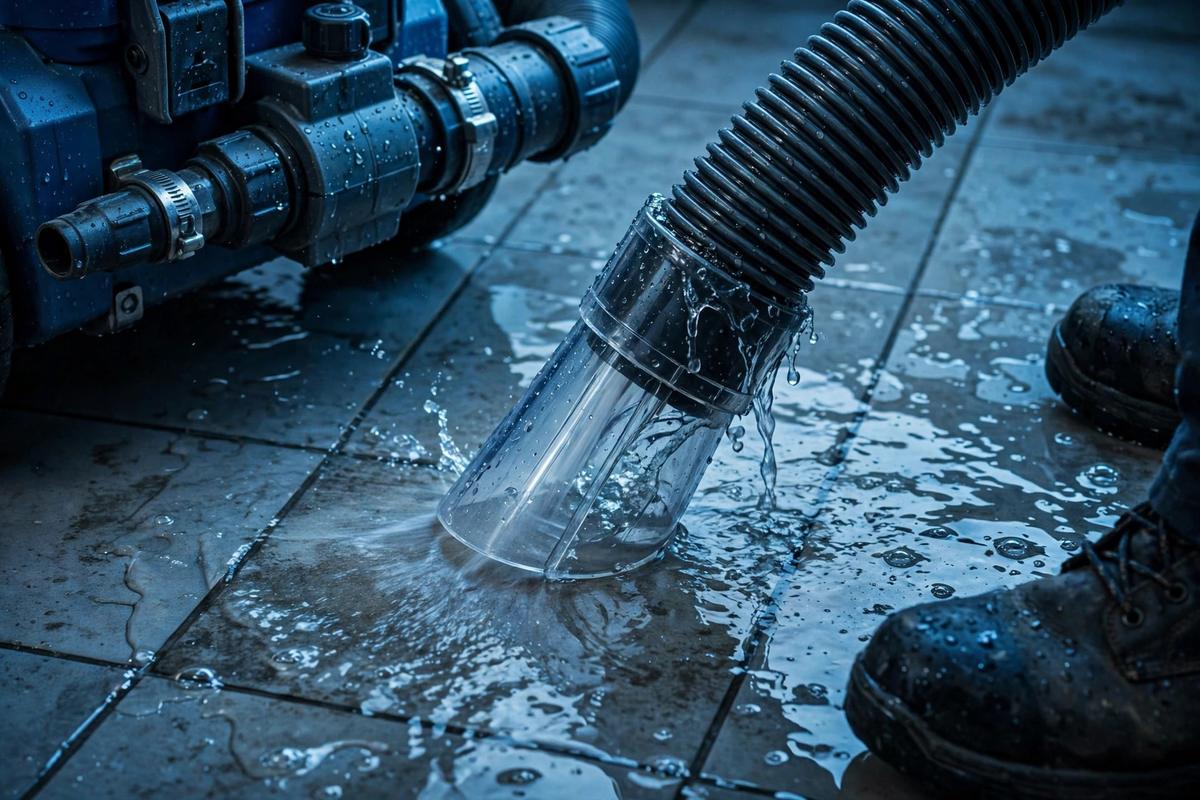
If you suspect hidden moisture in your Washington DC home, do not wait for visible damage to confirm it. Water Damage DC is a referral service — we connect you with local providers who use professional moisture detection, extraction, and structural drying to find and fix the problem at its source. Call (202) 449-5074 to be connected with a local provider.